

Maharashtra’s Dynamic Digital Landscape: With one of India’s highest internet penetration rates (about 69% in Maharashtra), businesses across the state – from Mumbai’s bustling markets to emerging hubs in Nagpur and Kolhapur – are experiencing a digital revolution. Consumers here are spending more time online than ever, engaging with social media, video streaming, and e-commerce platforms in huge numbers. In fact, India’s overall digital advertising spend is surging (projected to reach around ₹59,200 crore by 2025), and digital now rivals or exceeds traditional media in share of ad budgets. For Maharashtra’s startups, SMEs, and large enterprises alike, this means modernizing your paid advertising and influencer marketing strategy isn’t just an option – it’s mission-critical for growth.
In this comprehensive guide, Smart Designs – a leading digital marketing agency with deep regional expertise – breaks down eight key topics to help Maharashtrian businesses excel: media buying tactics for small vs. large companies, effective influencer collaboration models (and typical pricing), city-wise consumer behavior insights (Mumbai, Pune, Nagpur, Nashik, Aurangabad, Kolhapur), platform performance comparisons (Meta vs. Google vs. YouTube), budgeting strategies for different business scales, inspiring Indian campaign case studies, key industry players in the advertising ecosystem, and using paid ads to supercharge lead generation. Let’s dive in!
Media Buying Strategies: Small vs. Large Businesses
Media buying – the art of purchasing ad space or impressions for maximum impact – looks very different for a bootstrapped startup versus a large enterprise. Scale and budget fundamentally shape the approach:
- Small Businesses & Startups: Smaller firms often operate with tight budgets and need high ROI from each rupee. Unlike large corporations that spend ~9.1% of their revenue on marketing on average, many Indian SMEs spend an even higher portion in their early years to accelerate growth. The key is smart allocation: focus on channels that directly drive sales or leads. For example, a local Pune-based startup might allocate a modest monthly budget (say ₹25,000–₹50,000) to highly targeted Facebook Ads or Google Search Ads, ensuring every ad is shown to a relevant local audience. Most SMBs in India budget around ₹25,000 to ₹2,00,000 per month for comprehensive digital marketing, depending on their growth stage. With limited funds, it’s wise to start small, test, and double down on what works (be it a particular demographic on Instagram or a high-converting keyword on Google). Small businesses also benefit from the self-serve nature of digital ad platforms, which require no massive upfront commitments – you can run a campaign for even ₹500 a day and pause if needed.
- Large Enterprises: Bigger companies enjoy larger war chests and can pursue multi-channel, big-budget campaigns for both branding and performance. They might spread their media buys across everything from prime-time YouTube masthead ads to influencer takeovers on Instagram. While a small business might be thrilled to get 1,00,000 impressions, a large brand in Mumbai could be buying millions of impressions across Meta and Google’s networks. Interestingly, large enterprises often allocate around 9% (or more) of total company budget to marketing, which in absolute terms dwarfs what SMEs spend. This allows for programmatic advertising deals and premium inventory – for instance, a conglomerate can negotiate a takeover on a top news site or invest in high-impact video ads on Hotstar during IPL cricket season. The advantage large advertisers have is access to advanced tools and agency partnerships. They often work with major media agencies (the GroupMs and Dentsus of the world) to optimize spend using data-driven insights. They can afford branding campaigns with longer ROI horizons (like a statewide outdoor + digital combo campaign) alongside performance campaigns. However, big spenders still demand efficiency: they leverage data and analytics at scale, using sophisticated tracking to measure which channels give the best cost per acquisition. It’s no surprise that even giants are shifting budgets heavily to digital – it offers precision and measurable ROI that traditional media can’t match. By end-2024, Indian digital ad spend grew ~21% while TV advertising shrank, showing even large brands are following the eyeballs online.
Key Takeaway: Smaller businesses in Maharashtra should embrace digital media buying as a great equalizer – even with a few tens of thousands per month, you can outshine bigger competitors through clever targeting and creativity. Larger businesses, on the other hand, should ensure their hefty spends are data-optimized and diversified (social, search, video, OTT, etc.) for maximum omnipresence. In both cases, having a clear objective (brand awareness vs. lead gen) and tracking ROI is crucial. Smart Designs often advises clients to allocate budgets in phases – test new campaigns with a smaller spend, evaluate the cost per lead or sale, and then scale up the budget confidently once you see results.
Influencer Marketing in Maharashtra: Collaboration Models and Pricing

Influencer marketing has taken India by storm – and Maharashtra is no exception, with homegrown influencers ranging from Marathi food vloggers to Bollywood celebs on Instagram. But how can businesses collaborate with influencers effectively? Let’s break down the models and costs:
Common Influencer Collaboration Models
- Sponsored Content Posts: The most straightforward model – you pay an influencer to create a post (or a series of posts) featuring your product or message. This could be an Instagram photo with your fashion line or a YouTube video review of your software. Sponsored posts can be one-off or in batches. For example, a Nashik-based winery might sponsor a popular lifestyle Instagrammer to post a photo enjoying their wine at sunset. Sponsored content is usually clearly disclosed as an ad (per guidelines), but when done authentically it blends in with the influencer’s regular content style.
- Product Seeding & Reviews: Here, brands send free products or offer free services to influencers in hopes of getting a shout-out or review. In Maharashtra’s context, a new Kolhapur snack brand might send hampers to local food bloggers. If the influencer genuinely likes it, they’ll feature it (sometimes without additional fees). This model often works with micro-influencers who appreciate the free goodies and are happy to post if the product resonates with them. It’s a low-cost strategy, though not guaranteed – you can’t force an unpaid post, but a great product often earns organic mentions.
- Affiliate or Commission-Based Partnerships: The influencer gets a unique link or code and earns a commission on sales they drive. This model is performance-driven – you only pay when you get results. It’s common in sectors like fashion, beauty, or e-commerce. For example, a Mumbai fashion boutique could give a local fashion blogger a code “MUMBAI10” that gives customers 10% off. The blogger earns, say, 5-10% of each referred sale. This aligns incentives well – the influencer is motivated to actively promote the product because their earning is tied to it.
- Brand Ambassadorships: This is a longer-term, often exclusive collaboration. The influencer becomes a “face of the brand” for a period, participating in multiple campaigns. Big brands often go this route with celebrities or top-tier influencers. For instance, a Maharashtra-based fitness chain might sign a famous Marathi actor or a top fitness YouTuber as a year-long ambassador who regularly posts about the gym, appears in its ads, and attends its events. Ambassadorships typically come with a hefty retainer or contract fee.
- Event Collaborations and Takeovers: Brands invite influencers to events (store openings, launch parties) to create live content, or even let influencers “take over” their social media for a day. If you run a restaurant in Pune, you might host a meet-up for food influencers (providing a free dining experience) – they, in turn, vlog or post stories from your restaurant, giving you real-time exposure. Similarly, a local travel agency might let a travel influencer post on the agency’s Instagram Stories during a sponsored trip to boost the agency’s profile.
- Contests and Hashtag Challenges: In this model, multiple influencers are engaged to promote a contest or challenge to their followers. A well-known case was Zomato’s #EatLikeAChampion campaign, where food influencers across India (including Mumbai’s famous food bloggers) encouraged users to share their epic food moments. The influencers’ posts drive participation, effectively turning followers into brand content creators as well. Such campaigns can go viral if the challenge catches people’s imagination.
Influencer Pricing Benchmarks in India
Influencer pricing can vary widely – it depends on follower count, engagement rate, content niche, and platform. However, to plan your budget, it helps to know some ballpark figures and benchmarks in the Indian market:
- Nano and Micro-Influencers: These are creators with niche but dedicated followings (nano typically 1k–10k followers, micro 10k–100k followers). In India, a micro-influencer with ~50k Instagram followers might charge anywhere from ₹5,000 to ₹20,000 for a single post, depending on engagement. In fact, an analysis by marketing firm Kofluence found that many micro-influencers (10k–100k following, ~1.5-2% engagement rate) earn about ₹20,000 to ₹2,00,000 per month through brand collaborations. That translates to a few paid posts per month. Nano influencers might often accept just free products or a token ₹1,000–₹5,000 for a post since they are building their profile.
- Mid-Tier and Macro Influencers: Macro influencers (100k–1M followers) and well-known mid-tier creators command higher fees. For example, a YouTuber with 500k subscribers or an Instagrammer with 300k followers could charge tens of thousands of rupees per post or video. MoneyControl’s 2024 report gives a glimpse: on Instagram, macro influencers earned between ₹60,000 to ₹1.6 lakh per video, while on YouTube those with similar followings earned around ₹40,000 to ₹1,00,000 per video. So if your Pune-based tech firm wants a tech YouTuber (say 600k subs) to review your app, be ready to budget in that range for a dedicated video. These creators offer big reach, and if your target audience aligns with their followers, the investment can be worthwhile.
- Mega-Influencers and Celebrities: At the top are Bollywood stars, TV celebrities, or social media superstars with millions of followers. In influencer terms, these mega-influencers (1M+ following) charge premium rates and often require more formal contracts. To give a sense: Indian Instagram “celebrities” can earn ₹7–15 lakh per video post on Instagram, and YouTube celebrities might charge ₹1–5 lakh for a video. A one-off tweet or story from a film star might run in the few lakhs range as well. Because of these costs, big celebrities are usually engaged by large brands for broad-reach campaigns (often as ambassadors). For example, if a Mumbai luxury real estate developer ropes in a Bollywood actor to promote a new property, it’s as much about the star power (building trust and prestige) as it is about direct sales.
- Cost-Per-View or Performance-based Pricing: Some influencer deals, especially with experienced digital creators, use metrics like Cost per View (CPV). Different content niches have different CPVs. As per industry benchmarks, fashion influencers charge about ₹0.40–₹0.60 per view, while lifestyle influencers might charge ₹0.30–₹0.50 per view. Niche experts can charge more – e.g. a medical doctor influencer could charge ₹1–2 per view for health content, and finance influencers even higher at ₹3–₹4 per view, because their audience is seen as high value. If you prefer this model, you’d agree on paying per 1,000 views (CPM) the content generates. It aligns payment with actual reach achieved. Many brands find this transparent – you pay for results – and many influencers are open to it since it rewards them for creating viral content. Keep in mind, engagement rate is also a consideration: an influencer with fewer followers but higher likes/comments may justify a higher fee than a bigger influencer with a disengaged following.
Influencer Marketing Market Growth: It’s worth noting how rapidly this space is growing in India. The influencer marketing industry in India was estimated at around ₹2,344 crore in 2024 (roughly 25% growth over the previous year) and is projected to keep rising ~25% YoY. One report pegs it even higher – up to ₹5,500 crore by end of 2024, making up about 11% of India’s digital media spends. In other words, more than a tenth of all digital ad money is now going into influencers. This boom is driven by the ROI many brands are seeing and changing consumer behavior (more on that below).
Why Influencers Work (The Psychology): Consumers, especially in India, tend to trust people over blatant ads. A recent Kantar study found 67% of Indians trust influencer recommendations over traditional advertisements. The personal touch and authenticity (when done right) make influencer content feel more credible. And Indians are avidly following influencers – 81% of Indian internet users follow some influencer or content creator online, far higher than the global average. In fact, 60% of Indian consumers trust influencer advice (versus just 27% worldwide!). Culturally, recommendations carry weight – we’re used to word-of-mouth, and influencers are like a digital extension of that. For Maharashtrian consumers, seeing a local Marathi food blogger rave about a new snack brand in Kolhapur can be far more convincing than a generic billboard ad. Engagement and conversion tend to be higher when the fit is right: influencer content can outperform standard digital ads in driving metrics like brand favorability and purchase intent. Essentially, an influencer’s endorsement can nudge a hesitant buyer over the line by providing social proof.
Influencer Costs vs. Benefits: Is it worth spending, say, ₹50k on an influencer post? Often, yes – but you must choose wisely. Micro-influencers may give you a better engagement per rupee than a celebrity. Their audiences, albeit smaller, can be highly relevant and loyal. Also consider campaign structure: some brands use a “many micro” strategy, hiring 50 micro-influencers rather than one celebrity, to create widespread buzz at lower cost. Others mix tiers – a couple of big names for reach and a fleet of micro-influencers for localized engagement. At Smart Designs, we stress measuring the results: use trackable links or discount codes to see how much traffic or sales each influencer drove. Influencer marketing, when properly tracked, can deliver solid ROI. Many direct-to-consumer brands attribute huge growth to it – for example, beauty startup Mamaearth reportedly spends 70% of its digital marketing budget on influencer marketing and built massive awareness through influencer-led campaigns. On the flip side, an FMCG giant might spend only ~5% of its digital budget on influencers, using them more tactically for youth campaigns. The right balance will depend on your industry and goals.
Bottom line: Maharashtra businesses should tap into the diverse influencer talent available – be it a YouTuber in Nagpur or an Instagram fashionista in Mumbai – but do so with a clear strategy. Define your target audience, find influencers who genuinely sway that crowd (and align with your brand values), and negotiate a model that fits your budget. With fair compensation and creative freedom, influencers can become powerful brand advocates who speak to consumers in a relatable, trustworthy voice.
Advertising Behaviors Across Maharashtra’s Key Cities
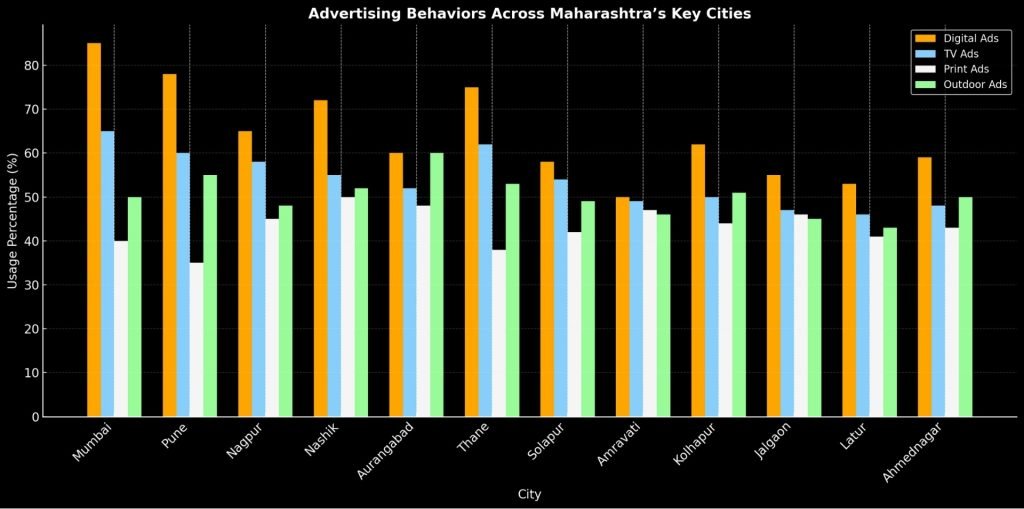
Maharashtra is a large, diverse state – consumer online behavior in Mumbai’s urban jungle differs from that in smaller cities like Aurangabad or Kolhapur. Understanding these nuances can help you tailor campaigns and media spends more effectively for each market.
1. Mumbai – The Digital Powerhouse: Mumbai is not just India’s financial capital, it’s a digital advertising hotspot. The city boasts one of the largest pools of social media users in the country – historically Mumbai has led in number of Facebook users among Indian cities, and it remains at the top with millions on Instagram, YouTube, LinkedIn, and more. Consumers in Mumbai are bombarded with ads both offline and online, so they tend to be a bit ad-weary and discerning. What works? Authentic storytelling and high-quality creatives. Mumbai audiences are cosmopolitan; English works widely, but so do Hindi and Marathi when targeting specific groups. We find behaviorally, Mumbai users are quick to adopt new platforms (for example, if there’s a new short-video app or a trend like podcasts, you can bet Mumbai’s digital crowd is on it). Ad competition is intense – keywords for Mumbai audiences or ad inventory geo-targeted to Mumbai often have higher costs due to many advertisers vying for this high-value market. But the payoff is big: Mumbai has a large affluent class and trendsetters. A buzz created in Mumbai (like a viral campaign or influencer trend) often reverberates nationally. Businesses in Mumbai should also note the 24×7 nature of the city – peak online times might differ, with late-night shopping or browsing quite common. And don’t forget local pride: campaigns that reference Mumbai’s culture (say, Dabbawalas, Ganesh Chaturthi, or even Mumbai’s traffic humor) can resonate well.
2. Pune – Tech-Savvy and Youthful: Pune, Maharashtra’s second largest city, is a unique mix of students, IT professionals, and a growing cosmopolitan crowd. It’s sometimes called the “Oxford of the East” due to its many universities – meaning lots of 18–25-year-olds glued to their smartphones. In Pune, we see very high engagement on Instagram and YouTube, and good uptake of LinkedIn among the professional community. Pune’s audience appreciates informative and innovative content (perhaps due to the academic vibe); campaigns that are quirky or knowledge-driven do well. For example, an educational tech firm advertising in Pune might get great leads via LinkedIn or Facebook by targeting by education level or interests, since many in Pune are pursuing higher studies or careers in tech. Local language vs English: Marathi is widely understood, but a large chunk of Pune’s online population is comfortable with English or Hindi content as well. It can be effective to use a mix – e.g. an edgy meme in Marathi for local relatability, paired with an English call-to-action for clarity. Pune’s consumers also have a close-knit community feel; leveraging community groups (like popular local Facebook groups or WhatsApp communities for events, food, etc.) can amplify trust. Advertisers note that Pune’s cost per click or impression might be slightly lower than Mumbai’s (fewer companies specifically geo-target Pune compared to Mumbai), making it attractive for cost-effective campaigns with decent reach.
3. Nagpur – The Emerging Hub: Nagpur, located centrally, is a growing city where digital adoption is rising fast. Traditionally known for oranges and as a transport hub, Nagpur now has a burgeoning young population getting active online. A sizable portion of Nagpur’s audience is more comfortable in Hindi or Marathi than English when it comes to content consumption. We’ve observed that YouTube is extremely popular in Nagpur, with users streaming a lot of Hindi/Marathi music, comedy, and how-to videos. For advertisers, this means YouTube ads (especially in local languages) can be very effective to reach Nagpurkars. Facebook also has deep penetration. However, platforms like Twitter or LinkedIn are relatively niche in Nagpur. Consumer behavior here still carries a bit of small-city caution – people trust recommendations from community members (which can include local influencers) more than unknown brands. So a strategy for Nagpur might involve collaborating with a Nagpur-based influencer (e.g. a local food blogger or a local celebrity anchor) to build credibility. Also, Nagpur being geographically in the heart of India, many national-level campaigns often include it as a key city for “Tier-2” targeting. If you’re running statewide Maharashtra campaigns, it’s wise to allocate some budget to Nagpur specifically rather than lumping it in “rest of India”, because tailoring creatives (mentioning Nagpur or local nuances) can significantly boost engagement. The cost of advertising targeting Nagpur is generally moderate – you might find cheaper CPMs compared to Pune or Mumbai. This means high-frequency exposure is feasible without breaking the bank, which is great for brand recall campaigns.
4. Nashik, Aurangabad, Kolhapur – Other Cities and Regional Behaviors: These cities represent important regional markets in Maharashtra, each with its own flavor:
- Nashik – an interesting mix of religious tourism (being a holy city), wine tourism (vineyards), and industry. Nashik’s internet users often consume content around travel, spirituality, and lifestyle. For instance, a travel agency might target Nashik residents with Facebook ads for weekend getaways or pilgrimage tours. Many Nashik businesses use WhatsApp marketing heavily – broadcasting offers and updates – as locals are very active on messaging apps. This points to a behavior: in smaller cities, peer sharing on WhatsApp or Facebook drives a lot of awareness (e.g. someone sees an ad or offer on Facebook and forwards it to family groups). Craft campaigns in a way that they’re easily shareable.
- Aurangabad – a historic city with a strong cultural identity (e.g. heritage sites like Ajanta-Ellora). Content in Marathi tends to perform well. Consumers here might be a bit more traditional in trust patterns, relying on known local brands. That said, young people in Aurangabad are on Instagram and YouTube just like elsewhere. An intriguing insight: e-commerce behavior in such cities often lags a couple of years behind metros – as trust in online shopping builds. So, re-targeting ads (reminders about abandoned carts, etc.) can be very useful to gently push them to complete purchases as they warm up to e-commerce.
- Kolhapur – known for its cuisine and footwear, among other things, Kolhapur has a vibrant local Facebook community. Local businesses here (like Kolhapuri chappal artisans) have started using Facebook and Instagram to sell beyond the city, tapping into wider markets. From a consumer angle, Kolhapur folks respond well to regionally tailored content – a Marathi caption or a reference to local festivals (like Kolhapur’s famous Navratri Mahalakshmi celebrations) can make an ad stand out. Moreover, video content in Marathi (short explainer videos, testimonials) gets good traction.
Urban vs. Rural Dynamics: It’s worth noting that over half of Maharashtra’s population is rural, and these rural consumers are coming online rapidly thanks to cheap smartphones and data (thanks, Jio!). While our focus is on cities, many Maharashtra businesses (especially in sectors like agri-tech, fintech, FMCG) might target rural audiences too. Interestingly, rural India now accounts for ~55% of India’s active internet users. That means even outside the cities, there’s a huge audience on Facebook, YouTube, and ShareChat (a regional language social app popular in many parts). For example, a farm equipment company in Maharashtra could run video ads in Marathi targeting users in rural districts, using Facebook’s location targeting. Behaviorally, these users might skip English content, but they love videos in their own language and content that feels relevant to daily needs.
Behavioral Psychology Across Regions: Why does someone in Mumbai click an ad versus someone in a small town? Often, it’s context. Mumbai consumers are more jaded – they see polished ads everywhere, so authenticity (or big wow factors) compels them. Tier-2 city consumers (like Nagpur or Nashik) might be more wary of scams or unknown brands, so trust signals (testimonials, influencer mentions, local store presence) carry weight. They are also more price-sensitive on average, so promotions and “value for money” messaging works wonders. Meanwhile, youth across cities are quite similar in one aspect: they love interactive content – polls, challenges, memes – and will engage if it’s fun regardless of city, as long as it’s in a language they’re comfortable with.
From an advertising spend perspective, you might allocate budgets city-wise based on opportunity. A typical Maharashtra-targeted digital plan for a state-wide service business might put ~50% to Mumbai, 20% to Pune, and split the remaining 30% among Nagpur, Nashik, etc., tweaking as results come in. Why? Because Mumbai/Pune will give volume but also have higher costs per lead; the smaller cities can yield lower cost leads but in smaller quantities. We’ve seen great success when businesses customize creatives for each city – even simply mentioning the city name in the ad copy (“Calling Pune foodies!” or “Nagpur Exclusive Offer”) can lift click-through rates, as people feel it’s directly relevant to them.
Conclusion for regional approach: Maharashtra’s audience isn’t monolithic. A one-size-fits-all campaign may miss the mark. By understanding local behaviors – from Mumbai’s always-online professionals to Kolhapur’s community-oriented shoppers – you can craft localized campaigns that truly connect. Smart Designs uses a data-driven approach here: we analyze which city is giving the best engagement or ROI and continuously re-balance budgets. For you, even if you don’t have fancy tools, simply keep an eye on your campaign metrics by city (any good ad platform will show this). You’ll soon notice patterns, like maybe Nagpur is giving cheaper video views or Pune is driving more site traffic, and you can adapt strategy accordingly. That’s the beauty of digital marketing – real-time learning and optimization across regions.
Meta vs. Google vs. YouTube: Which Advertising Platform Performs Best?
One of the biggest questions in paid advertising is: where should your money go? Facebook/Instagram (Meta) ads, Google ads, YouTube ads – all have their strengths. The reality is that an integrated approach works best, but the mix depends on your goals and audience. Let’s compare these major platforms in the Indian context:
Meta Ads (Facebook & Instagram)
Meta’s platforms are a go-to for many businesses due to their massive user base and advanced targeting. Facebook has over 314 million users in India, and Instagram has around 230 million (as of early 2023, and growing). In Maharashtra, practically everyone from college teens in Pune to entrepreneurs in Mumbai is on one or both of these.
- Ad Formats & Objectives: Meta offers diverse formats – image ads, carousel ads, video ads, Stories ads, and now Reels ads. Whether you want brand awareness or conversions, there’s an objective for it. If you run a fashion boutique in Mumbai, an Instagram Stories ad showing your latest collection with a swipe-up link to purchase can be very effective for impulse buys. For a B2B software firm in Pune, a lead form ad on Facebook (where users can submit their info without leaving the app) might generate cost-efficient leads.
- Targeting Power: Meta arguably has the most granular targeting. You can target by demographics (age, gender, city), interests (e.g. “entrepreneurship” or “Bollywood music”), behaviors, and even custom audiences (like your website visitors or customer list). Want to reach young moms in Nashik interested in nutrition? You can. This granularity is gold for small businesses who know their niche. Large brands also use it to segment messaging – for instance, a bank might show a different ad to 25-year-old users (“plan your investments early”) vs 50-year-old users (“secure your retirement”). Keep in mind, some recent privacy changes mean interest targeting isn’t as creepily precise as it once was, but it’s still incredibly potent.
- Performance & Costs: Meta ads often excel at mid-funnel goals – engagement, driving traffic, etc., and with the right optimization, they do well for conversions too. The average cost-per-click (CPC) on Facebook in India is around ₹23–24 (roughly $0.3), which is cheaper than in many countries but this varies by target. Popular audiences (e.g. affluent urban millennials) will cost more, whereas a very niche local audience might be cheaper. Importantly, the cost per result (like per lead or per sale) is what matters – and Meta’s algorithm, if you feed it good data, learns and improves over time. We’ve seen campaigns start with ₹200 per lead cost and, after optimization and lookalike targeting, drop to ₹100 per lead or lower. Another advantage: visual impact. People spend hours scrolling these feeds; a thumb-stopping ad creative (vibrant image or a catchy 6-second video) can do wonders in this environment. Both Facebook and Instagram support Marathi and Hindi ads too, so for local appeal you can run ads in Marathi (say, a Kolhapur event promotion written in Marathi to hit home with locals).
- Ideal Use Cases: Meta is fantastic for B2C marketing, community building, and retargeting. It’s where people discover new products serendipitously (e.g. an Instagram ad for a cool new gadget). It’s also social; engagement (likes/comments/shares) on your ads can build social proof. For Maharashtra businesses, running a sustained Facebook/Instagram presence can also complement ads – posts from your page, influencer tags, etc., all create an echo effect. One limitation: when people have high intent (like actively searching for something specific), they might go to Google – which brings us to…
Google Ads (Search & Display)
Google is the king of intent-based advertising. When someone goes to Google and searches “best hotel in Lonavala” or “buy organic fertilizer Pune”, they are actively seeking something – making them a very hot prospect if you match their query.
- Search Ads: These are the text ads that appear on Google’s search results. For many businesses, especially those offering a clear product or service, Google Search ads deliver the highest conversion rates because you capture people at the moment of intent. For example, a Mumbai law firm using Google Ads can bid on “corporate lawyer Mumbai” – the clicks might cost, say, ₹50 or ₹100 each (just a hypothetical; competitive keywords like insurance can cost much more), but those clicks are from people looking for that service right now, so the likelihood of converting to a lead is high. In India, search volumes are huge and growing, including voice search in local languages. Make sure to leverage location targeting and extensions – e.g., a chain of gyms can show a “Thane branch – 2 km away” in the ad if the user is in Thane, which improves relevance. In terms of cost, Indian search CPCs vary wildly by sector: some broad terms can be under ₹10 a click, whereas niches like “home loan” might be a few hundred rupees per click due to competition. The key is to identify specific keywords that indicate strong intent for your offering and not waste budget on generic terms. Smart Designs often uses a mix of broad match (to capture variants) with smart bidding so Google’s AI can optimize bids when it predicts a conversion is likely.
- Google Display Network (GDN): Google also allows you to place banner ads on a vast network of websites and apps (news sites, blogs, etc.) that host Google ad slots. This is great for awareness and retargeting. For instance, if someone visited your ecommerce site for handbags but didn’t purchase, you can “follow” them with display ads showing those handbags (reminding them to buy) as they read news or a blog. Display ads in India have relatively low cost per impression (CPM). You might get thousands of ad views for a few hundred rupees. However, click-through rates are typically low (people don’t click banners as much as they click search results or social ads). The value is in visibility and subconscious reinforcement. GDN is also useful to reach audiences by interest or demographic in a more passive way – e.g., a tourism company could show banner ads about “Visit Mahabaleshwar” on travel-related websites to users in Maharashtra. YouTube ads are technically part of Google’s universe too (more on that below).
- YouTube Search & Discovery Ads: A lesser-known Google ad format – you can actually run ads that appear in YouTube search results or as recommended videos. If you have video content, this is another way to promote it when people search YouTube (like “how to bake a cake” could show an ad-video for your baking product).
- Performance & Use Cases: Google Ads shine for lead generation and capturing demand. If you’re a service that people search for (real estate, education, healthcare, etc.), not being on Google is a missed opportunity. In Maharashtra’s metros, people habitually Google for solutions – e.g. “best caterer in Pune” or “IT training course Mumbai”. Being the top ad there lends your business instant visibility at the exact right moment. Google ads are also effective for hyperlocal targeting via maps – e.g., showing up on Google Maps for “restaurants near me” through location extensions or promoted pins. One thing to manage is budget pacing: a popular keyword can eat your daily budget in hours if not controlled. So, use ad scheduling if appropriate (maybe your audience searches more in evenings – allocate more budget then), and use conversion tracking to let Google optimize bids (their machine learning can bid higher for users likely to convert, saving money on those less likely).
- ROI and Metrics: Generally, we measure success on Google by cost per conversion (lead or sale). When set up correctly, it often yields very competitive costs per lead. For example, a Pune-based MBA college might get inquiries at ₹150 each via Google Ads, whereas broad social campaigns might be ₹250+ per lead, simply because Google is pulling in those actively interested in “MBA admission”. However, Google might not scale volume as much if the search volume is limited – that’s where you saturate demand and then turn to platforms like Meta or YouTube to generate interest.
YouTube Ads (Video Advertising)
YouTube is sometimes grouped under Google (since Google owns it), but it deserves special attention. It’s India’s largest video platform with over 467 million users in India – and Maharashtra, with its love for cinema and music, contributes heavily to those numbers. From Mumbai music videos to Marathi comedy channels, YouTube content consumption is massive.
- Ad Formats: The most common YouTube ads are skippable in-stream ads (those 5-second must-watch then skip videos that play before or during a video) and non-skippable short ads (15-second forced view, usually used sparingly). There are also bumper ads (6-second non-skippable) which are great for quick brand messages. Additionally, you can have overlay banners or sponsored cards, but the video ads are the star. If you have a video ad (say a 20-second commercial for your product), you can get it seen by thousands of people on YouTube via these formats.
- Reach and Targeting: YouTube’s reach in regional India is huge – content in Hindi, Marathi, and every language finds an audience. You can target YouTube ads similar to GDN: by demographics, interests, keywords (show your ad on videos about certain topics), or placements (specific channels). For instance, if you sell music instruments in Mumbai, you could target your video ad on popular music tutorial channels or to users who have been searching Google/YouTube for “buy guitar online”. A neat aspect is remarketing synergy: you can retarget people on YouTube who visited your website (via Google Ads linking). So maybe someone looked at your product page – later while they’re watching a song on YT, they see your ad reminding them of the product. That cross-platform retargeting works wonders.
- Cost & Performance: YouTube ads are often cheaper per view than other forms of advertising. Typical cost per view (CPV) in India ranges from only about ₹0.5 to ₹3 per view depending on targeting. And you usually only pay if the viewer watches 30 seconds or more (or clicks), so short skippable ads sometimes incur no cost if skipped early. In practice, you could reach 1,00,000 views for a few tens of thousands of rupees – an impressive reach for the cost. Of course, not all viewers will be interested, but even as a pure awareness play, that’s strong. The CPMs (cost per 1000 impressions) might be around ₹40–₹150, which is far lower than prime-time TV, making YouTube essentially the new TV for advertisers with more flexibility and targeting.
- Impact and Use Cases: Video is a powerful storytelling tool. YouTube is where you can demonstrate your product, show customer testimonials, or just entertain while subtly marketing. For example, a Nashik-based adventure park could run thrilling 15-second ads showing people zip-lining and rafting, to build excitement and drive weekend footfall. A key tip: ensure your message hits in the first 5 seconds (in case they skip). Even if users skip at second 6, they should at least know your brand name and a tagline. We often use YouTube for brand lift – clients see a jump in branded searches and direct traffic after a big YouTube campaign, as people become aware of them. It’s also great for education – complex products (insurance, B2B software) can use YouTube ads to offer a quick explainer, warming the audience up to why they need the product, before retargeting them with a search or social ad for conversion.
- Integration with TV and Offline: Many large Maharashtra brands use YouTube as an extension of their TV campaigns. For instance, a Marathi-language TV ad during a serial can be complemented by the same ad running on YouTube targeting Marathi-speaking users online. This multi-screen approach increases frequency of message. Even if you’re a smaller business with no TV spot, you can still achieve a “TV-like” presence by consistently advertising on YouTube in your locale or niche. The big plus – you pay only for engaged views and can measure everything.
Platform Performance Comparison – Summing Up:
There isn’t a single “best” platform – each excels in areas:
- Meta (FB/IG) = excellent for audience engagement, social proof, visual branding, and broad interest targeting. It’s often the first touch in the funnel (awareness/interest), but also with features like Facebook Shops and IG Shopping, it can drive direct sales for impulse-friendly products. Use it to create buzz and community.
- Google Search = the master of intent fulfillment and lead generation. If there’s search demand for what you offer, capture it here. It often yields the best quality leads/customers because users self-qualified by searching.
- YouTube = the reach and storytelling giant, giving you a television-like canvas with precision targeting and interactive potential. Great for brand recall and educating the market, which in turn boosts performance on other channels (people who saw your YouTube ad might later click your Google ad or engage with your Insta post).
For Maharashtra businesses, an integrated campaign might look like this: Use Facebook/Instagram ads to create initial awareness of your new product launch (targeting, say, 25-40 age group in major Maharashtrian cities with attractive visuals). Run a YouTube ad campaign simultaneously to showcase the product in action and build a deeper connection (maybe even in Marathi for regional personalization). Finally, catch the intent – when those exposed people or others start Googling “[Your Product] price” or “best”
Managing multiple platforms can sound daunting, but tools like Google Analytics or Meta Pixel help attribute conversions so you know what’s working. And Smart Designs specializes in finding the optimal mix – we often start campaigns on all three and then optimize budget towards the platform giving the best ROI while still maintaining a presence across the funnel.
The digital marketing rule of thumb: be present where your customers are. In Maharashtra, they are on Facebook/Instagram during their commute, searching Google during their work or decision-making moments, and unwinding on YouTube in the evenings. A smart allocation across these ensures your brand remains visible and persuasive throughout their day.
Ad Budgeting Tips for Different Business Scales
How much should you spend on digital advertising? This is a million-rupee question (literally) for many businesses. The answer depends on your business size, goals, and market, but there are general guidelines and best practices to budgeting that can help ensure you get a strong return on investment.
Budgeting for Startups and SMEs
For smaller businesses or startups in Maharashtra, budgets may be tight, but remember – marketing is an investment, not an expense. As mentioned, many small businesses need to spend significantly on marketing to break out of the “high-risk” early phase and achieve growth. In fact, marketing experts often suggest young companies plow anywhere from 10% to even 20% of their revenue into marketing to accelerate growth (compared to 2-5% for more established firms). It might sound high, but when you’re new, you need that push to acquire customers and build brand awareness.
Here are some budgeting tips for this scale:
- Start with Clear Objectives: Are you looking to generate leads? Drive e-commerce sales? Build brand awareness locally? Your goal will dictate the budget allocation. If immediate lead gen is key, you might allocate more to high-intent channels like Google Search. If awareness is the first step (new product category, etc.), more to social and YouTube. Write down one or two primary KPIs (e.g. cost per lead ≤ ₹200, or 50,000 website visitors in 3 months) – these will guide spend.
- Allocate by High-ROI Activities First: As a small business, prioritize channels that have a track record of ROI. For many, that means search ads or targeted social ads. For example, if you have ₹1,00,000 for a month, you might put 50% into search (because those likely convert best), 30% into Facebook/Instagram (to fill top of funnel and retarget), and 20% into a small YouTube or content experiment. This is just a starting point – the idea is to ensure a chunk goes to “tried and true” while some is reserved for testing new waters.
- Don’t Spread Too Thin: It’s better to dominate a couple of channels than to be invisibly thin on five. If your budget is small, focus on the platforms most likely to contain your audience. For instance, a local boutique might do just fine with only Facebook/Instagram ads and skip LinkedIn or Twitter which are not purchase-focused. A B2B service could stick to Google and LinkedIn and skip Instagram. Master one platform, then expand.
- Use Budget Pacing and Geotargeting: Let’s say you serve only Pune and Mumbai. No need to waste impressions in Delhi or Bangalore – ensure your campaign location targeting is set to Maharashtra or those cities. Also, break down budgets by region if customer values differ. If a Pune lead is worth more to you than a Nashik lead, allocate more to Pune accordingly. Most ad platforms let you set spend limits or distribute budget between campaigns (e.g. ₹X per day on Campaign A, ₹Y on Campaign B). Monitor this so you don’t accidentally overspend on one campaign just because it can (especially relevant on Google where one broad keyword could eat your budget).
- Leverage Free/Low-Cost Strategies Alongside Paid: For small businesses, every rupee counts. Pair your paid campaigns with organic efforts – e.g., good SEO on your site to get free Google traffic over time, active social media posting to build an audience, listing on Google My Business (for local search visibility – it’s free). These bolster your presence and make your paid spend more efficient (for instance, someone might see your ad then later come organically to your site and convert).
- Measure and Be Ready to Pivot: The beauty of digital ads is you get data quickly. If after ₹10,000 spent on a campaign you see few results, don’t keep throwing money – analyze and tweak (or even pause that channel and reallocate budget elsewhere). Maybe your Facebook ads are yielding ₹50 per website click, but your Google ads yield ₹10 per click – that’s a sign to re-balance funds toward Google. Small businesses should review campaigns weekly (if not daily for very active ones) and be agile. It’s perfectly okay to start with a conservative spend, see what’s working, then scale up once you find the sweet spot. In fact, that’s prudent.
Numbers example: A modest digital budget might be ₹50,000 per month for a local SME. One could allocate ₹25k to Google search, ₹15k to Facebook/Instagram, ₹5k to remarketing (across Google Display and FB), and ₹5k to a trial on YouTube or an influencer micro-campaign. If any of those start outperforming (say FB is getting sales at half the cost of Google), you reallocate next month accordingly. Always keep a small reserve (~10%) for experimentation – maybe testing LinkedIn ads for a month, or trying a new ad format. This is how you discover untapped opportunities.
Budgeting for Large Enterprises and Campaigns at Scale
Larger companies in Maharashtra (or national companies targeting the state) often deal with marketing budgets in the order of crores annually. The challenge here is optimizing allocation across a broad mix of channels and ensuring each contributes to overall objectives. Some tips for big budgets:
- Strategic Allocation – 70/20/10 Rule: Big advertisers often follow a portfolio approach. For instance: ~70% of budget into core proven channels (say, Google search, mainstream social ads, maybe a bit of print/TV if still in mix); ~20% into newer but promising channels (like influencer marketing, content marketing, regional language initiatives); and ~10% into experimental ideas (new platforms, pilot projects, AI-driven campaigns). This ensures innovation while safeguarding the bulk of spend for reliable returns.
- Allocate by Funnel Stage: Another approach – divide by marketing funnel. Awareness (top of funnel) gets a certain % (maybe 40% of budget, covering broad reach media like YouTube, display, influencer campaigns), Consideration/Nurture (mid-funnel) gets say 30% (covering content marketing, email, remarketing ads, etc.), and Conversion/Acquisition (bottom funnel) gets 30% (covering search ads, retargeting offers, etc.). For example, a large fintech company might spend on TV and YouTube for brand awareness (top), sponsored webinars or comparison site ads for consideration (mid), and heavy Google Search and Facebook retargeting for sign-ups (bottom). Each stage’s spend is tuned to push people to the next stage.
- Regional and Language Budgeting: For a state-focused campaign, allocate budgets to ensure key regions are saturated. A statewide retailer might allocate more ads to higher population areas (Mumbai, Pune) but also reserve budget to dominate smaller cities where competition is less. Also consider splitting campaigns by language – e.g. budget for Marathi creatives vs English creatives – and measure which performs better in which areas. Big brands often run parallel Hindi, English, Marathi campaigns to see resonance.
- Use Data and Marketing Mix Modeling: At scale, it becomes important to quantify what each channel contributes. Techniques like marketing mix modeling (MMM) or multi-touch attribution can guide budget shifts (e.g., analysis might show that past campaigns got the best ROI from search and influencer marketing working together, whereas a certain display ad spend had diminishing returns – so you’d cut the waste and put that money where it drives incremental sales). If you don’t have fancy modeling, at least track cost per conversion by channel and also the quality of those conversions (e.g., leads from LinkedIn might convert to sales at a higher rate than leads from display ads, etc.).
- Account for Ad Fatigue and Frequency: With big budgets, it’s easy to overexpose the audience (too many ad impressions leading to fatigue or annoyance). Monitor frequency capping – ensure the same person doesn’t see your ad 20 times and get irritated. It might mean spreading budget to additional channels or widening targeting after you saturate one group. Large brands also rotate creatives more frequently (a new design every few weeks) to keep ads fresh when spending at scale.
- Contingency and Flexibility: Big marketing plans should leave some buffer. For example, keep aside 5-10% of budget as contingency for opportunistic spends – say a competitor has a PR crisis and there’s an opportunity for you to swoop in with extra ads highlighting your strengths, or an unplanned sponsorship opportunity arises. Also, in digital, costs can fluctuate (CPCs rising during festive seasons), so a buffer helps maintain presence without overshooting budget.
One more consideration – seasonality. Large advertisers plan for festive bursts (Diwali, Ganesh Chaturthi in Maharashtra, New Year, etc.). It might be wise to allocate say 50% of your quarterly budget in the one month around the big festival if that’s when consumers spend most (common in retail, e-commerce). Maharashtra sees spikes around Ganesh festival (especially for consumer goods, clothing, sweets) and even around Marathi New Year (Gudi Padwa). Big brands time their big campaigns accordingly, and it’s worth mirroring that pattern on digital.
Finally, whether you’re small or big, remember to periodically audit and reset your budgets. Markets change, new platforms emerge (who imagined a few years ago that businesses would consider advertising on something like ShareChat or Moj, which are now sizable Indian apps?). Keep an eye on where your audience’s attention shifts and be ready to reallocate future budgets in that direction. For instance, if over time you notice your target youth audience spending more time on Instagram and less on Facebook, you’d gradually tilt spend to IG or Reels ads.
Smart Designs often works with clients of all sizes to fine-tune their budget allocation. Our mantra is maximize ROI, then maximize scale. We help small businesses squeeze the most out of ₹1 lakh, and help large ones ensure the next ₹1 crore is spent better than the last. The common thread: data-driven budgeting and agile adjustments are key to high-ROI campaigns.
Indian Case Studies: Successful Campaigns and Lessons
Nothing inspires confidence like real examples of marketing success. Let’s look at a few Indian (and Maharashtrian) case studies in paid advertising and influencer marketing – and draw insights from each:
- BoAt Lifestyle’s Influencer Blitz: BoAt, an Indian audio electronics brand, executed a wildly successful influencer-driven campaign that turned its affordable earphones into a cool lifestyle statement. In their “#BoAthead” campaign, they collaborated with dozens of micro and macro influencers across fashion, fitness, music, and tech niches – many of them Maharashtrian youth icons – showcasing BoAt earphones as part of a trendy life (gym, travel, college, etc.). By choosing influencers who resonated with young, dynamic audiences and spreading content across Instagram, YouTube, and even TikTok (when it was around), BoAt achieved tremendous reach and engagement. The content didn’t feel like ads, but personal endorsements. The result? BoAt built a community of “BoAtheads” and saw its market share in the youth segment skyrocket. The key takeaway is the power of volume + relevance in influencer marketing: many authentic voices singing your praise in unison can lift a brand’s cool factor more effectively than any single big celebrity ad. For businesses, especially consumer electronics or fashion, BoAt’s playbook of mass influencer collaboration shows how to become a youth favorite without traditional advertising.
- Zomato’s #EatLikeAChampion Meme Campaign: Food delivery giant Zomato is known for its quirky marketing, and one of their influencer campaigns around IPL season was #EatLikeAChampion. They roped in popular food bloggers and meme pages (some in Maharashtra) to create content linking the joy of eating with cricket fandom. Influencers shared their “cheat meal” feasts on match days, encouraging audiences to order via Zomato to enjoy the games with good food. They smartly incorporated user-generated content – fans were posting their own food spreads using the hashtag. The campaign effectively associated Zomato with the excitement of IPL, leading to a spike in orders. It shows the blend of influencer push + user participation. For other brands, especially those that can latch onto pop culture or sports events, creating a campaign where influencers initiate a trend and consumers join can greatly amplify reach (at a relatively low cost, since your customers essentially become your marketers by sharing posts).
- Cadbury’s Hyperlocal Celebrity Campaign: In 2020, Cadbury India pulled off a heartwarming hyperlocal campaign, “Not Just A Cadbury Ad,” featuring megastar Shah Rukh Khan. What made it special is they used AI to let SRK “endorse” local businesses by name. So viewers in, say, Pune would see SRK seemingly take names of local Pune stores to encourage buying from them. The campaign was widely praised and went viral. While it was a big-budget production, the local impact in Maharashtra was huge – small businesses felt seen and consumers felt a community spirit. The digital angle was Cadbury allowing any local store to generate a version of the ad with their store name. Over 1,000 local businesses participated. This case is a bit different – it’s not about ROI in sales for Cadbury directly, but about brand goodwill and creative use of tech+influence. The takeaway is the power of personalization at scale. If you can tailor your advertising message to local contexts (even using simple methods like geotargeted ad copy, or dynamic insertion of city names in digital ads), it resonates much more. Cadbury used the biggest influencer (a celebrity) but made the message hyper-local – a strategy any business can emulate in smaller ways.
- Under Armour’s 200 Million Reach with #ZiddForMore: Sportswear brand Under Armour launched in India and faced heavy competition from Nike, Adidas etc. They ran an influencer-led campaign featuring Olympic gold medalist Neeraj Chopra with the theme #ZiddForMore (roughly “determination for more”). They rolled it out during the T20 Cricket World Cup, starting with a TV ad, but crucially followed up with a social media and YouTube blitz where dozens of sports and fitness influencers shared their own stories of “zidd” (determination) to achieve goals. By combining a mass event (World Cup, where they also advertised on TV) with targeted digital influencer content, they achieved over 200 million cumulative reach. This case highlights a multi-channel synergy: TV gave broad awareness and credibility, and social media gave depth and personal connection. For large campaigns, the lesson is integration – using influencers to amplify a core campaign message can dramatically extend its life and engagement. Even if you’re not on TV, you can simulate this by say, having a core video ad on YouTube and a bunch of influencers riffing on that theme on Instagram.
- Local Pune Salon’s Lead Gen via Facebook Ads: Let’s look at a smaller, hypothetical case based on a real pattern we’ve seen. A chain of salons in Pune wanted to grow its customer base. They ran a series of highly localized Facebook lead ad campaigns offering a “Free Hair Spa on First Visit – Koregaon Park Salon” targeted to women 20-45 living within 5km of that particular outlet. Each salon outlet had its own campaign targeting its vicinity. The ads used regional celebs in images (a popular Marathi TV actress getting a haircut) for relatability. The result: Within a month, each outlet got hundreds of leads (people submitting their contact to redeem the offer) at an average cost of maybe ₹30-₹40 per lead. About 30% of those who signed up actually walked in and availed the service (which still made it a very cost-effective customer acquisition). This shows that even a very localized small business can effectively leverage paid ads for lead generation. The keys were: a strong incentive, tight geo-targeting, and a simple lead form. The broader point – paid ads aren’t just for online products or big brands; brick-and-mortar businesses in Maharashtra can drive footfall through digital by catching people in their neighborhood on Facebook/Google.
- Mamaearth’s Influencer-First Growth: We mentioned Mamaearth earlier – this Delhi-based (pan-India market) D2C beauty brand utilized influencers on Instagram and YouTube so heavily that within a few years they rivaled established FMCG brands. While not Maharashtra-specific, their campaigns included Marathi mommy bloggers and local skincare influencers, making the brand a household name among young parents especially. They often had dozens of micro-influencers posting honest reviews of their toxin-free products every month. Mamaearth’s success, hitting over ₹1000 crore in revenue and even bringing on celebrity ambassadors later, underlines how a smart influencer strategy can disrupt markets. The relatability and trust built via countless influencer recommendations gave consumers confidence in a new brand. For new entrants in any market (including Maharashtra), it’s a case study on how to win against bigger players by building social proof and targeted reach through influencer communities, rather than burning cash on traditional ads.
Each of these case studies offers inspiration:
- BoAt and Mamaearth: leverage many voices to build a movement around your brand.
- Zomato and Cadbury: tap into culture and community, be it cricket or local pride, to create emotional resonance.
- Under Armour: integrate influencers with larger campaigns for maximal effect.
- The Pune Salon (and many SMEs like it): use performance marketing and localized targeting to get tangible foot traffic or leads.
As a Maharashtra business, think about which strategy fits your situation. Is your brand story one of local heritage? Then a hyperlocal campaign might be gold. Are you trying to be hip with Gen Z? An influencer blitz or meme campaign could be your path. Need immediate leads? A well-crafted Facebook/Google ad funnel might be the hero.
Smart Designs has worked on many such success stories – from helping a Kolhapur sweets shop go viral in Pune, to boosting a Mumbai fintech app’s downloads via campus influencers. The patterns of success repeat: a clear goal, knowing your audience, creative execution, and smart use of the digital channels at your disposal.
Key Industry Players in the Advertising Ecosystem

In navigating the world of paid advertising and influencer marketing, it helps to know the major players that define the industry landscape. “Players” here include the platforms, the big spenders, and the facilitators (agencies/tech providers). Let’s map out who’s who in India (and Maharashtra) when it comes to digital marketing:
- Global Tech Giants (Advertising Platforms): At the core are the platforms we’ve already discussed. Google and Meta (Facebook/Instagram) are the heavyweight champions, soaking up the largest share of digital ad spends. In India, social media (dominated by Meta) contributes about 29% of digital ad spend (₹14,480 crore) and online video (largely YouTube, part of Google’s empire) is a close second at ~28% (₹13,756 crore). These two essentially control more than half of all digital advertising in India by value. Any business entering digital marketing inevitably deals with Google’s ad platform and Meta’s ad manager as primary tools. YouTube, as part of Google, is enormous on its own – effectively a key player rather than just another channel. Then there’s Amazon – not just an e-commerce site but a growing ad platform through retail media. Retail media, which includes ads on e-commerce marketplaces like Amazon, Flipkart, Nykaa, etc., is drawing a big chunk of budgets now. For instance, sellers pay to promote products on Amazon’s search or homepage, and big brands pay for display ads on these marketplaces. With Amazon India being one of the top advertisers overall, it’s both a platform and a big spender (advertising its own services). Other notable platforms: LinkedIn (important for B2B marketing and high-value professionals, especially in cities like Mumbai/Pune with huge professional populations), Twitter (X) to some extent for real-time engagement (though smaller reach), and emerging Indian platforms like ShareChat/Moj (popular for vernacular audiences – if you want to hit Marathi speakers upcountry, ShareChat has many users). OTT streaming platforms (Disney+ Hotstar, JioCinema, MX Player, etc.) have also become advertising players – many brands now buy video ad slots on OTT apps, especially during big events (Hotstar during cricket IPL, for example). The industry trend is that beyond Google/Meta, these new platforms (e-commerce ads, OTT, etc.) are grabbing greater share, projected to push digital to ~61% of all ad spend by 2026.
- Major Advertisers (Brands & Sectors): On the spending side, knowing which industries spend the most can reveal where the competition is fiercest. In India, traditionally FMCG (consumer goods), e-commerce, automotive, telecom, and financial services are big advertisers. In recent years, tech startups (especially unicorn e-commerce, ed-tech, fintech companies backed by investors) have also spent massively on digital marketing to acquire users. For example, you might have noticed how during sales, Flipkart and Amazon flood ads everywhere – they are not just platforms, but advertisers for their own brands. In Maharashtra, you have many local big players too: e.g., BFSI companies in Mumbai (banks, insurers) invest a lot in marketing, Bollywood and entertainment spends heavily to promote movies on digital, education institutes in Pune/Nagpur push ads during admission season, etc. For a smaller business, knowing that, say, real estate giants and banks are bidding high on Google keywords in Mumbai might encourage you to find alternate keywords or different platforms where you can compete without being outbid. Also, seasonal big spenders like retail and consumer electronics around Diwali can drive up ad costs across the board during that time. If you’re advertising during such peaks, be prepared for higher CPMs/CPCs (or time your heavy campaigns in slightly off-peak periods if that’s feasible).
- Influencers and Celebrity Endorsers: In the influencer marketing realm, key players include top influencers/celebrities themselves and the networks that manage them. India’s top influencers range from Bollywood stars (e.g. actors like Alia Bhatt or sports heroes like Virat Kohli, who often double as brand ambassadors for multiple products) down to regional stars (Marathi film actors, local YouTube stars). For Maharashtra specifically, leveraging a Marathi entertainment star (say a Marathi film actress or a popular regional singer) could be more cost-effective and impactful for the local market than a national Hindi-speaking celeb, depending on your brand. There are also influencer marketing agencies and platforms (like Influencer.in by Social Beat, or digital talent agencies) which act as match-makers between brands and influencers. They’re key players in that they can ease the collaboration process, but they also might mark up costs. Some of the well-known ones in India include firms like Monk-E, Mad Influence, etc., and globally connected agencies like MissMalini (for lifestyle) or One Digital. If you plan to do a big influencer push, knowing these facilitators can help (or you can reach out to influencers directly for smaller campaigns).
- Digital Marketing Agencies and Media Buyers: Companies often rely on agencies for expertise and execution. Smart Designs, the agency behind this guide, is one example – we pride ourselves in being a local expert with global knowledge, helping Maharashtra businesses get the best of both worlds. On a larger scale, the industry has big network agencies (like WPP’s GroupM, Dentsu Aegis Network, Publicis, etc.) which handle huge accounts (often for enterprise clients). These big media agencies often have bulk buying deals with platforms (for example, they might get preferred rates on Google/FB because they represent so much ad spend) – an advantage for big advertisers. There are also creative agencies that craft the content for ads, and PR agencies that amplify campaigns. Why this matters: As a business, when you’re planning campaigns, you might engage some of these players. For instance, hiring an agency like Smart Designs can give you a team that already has relationships with influencer networks, understands platform algorithms, and can navigate the complexities for you. Agencies are players that can dramatically boost a campaign’s ROI if chosen well, as they bring in domain expertise and save you from costly trial and error.
- Industry Bodies and Regulations: A subtle player in how advertising is done are the industry bodies like ASCI (Advertising Standards Council of India) and government regulations. ASCI provides guidelines for influencer disclosures, decency, etc. – failing to adhere can cause negative press (e.g., ASCI has flagged many influencer posts that weren’t labeled as ads). So they indirectly influence how campaigns are executed. The government also influences via data privacy rules (potentially changing what targeting is allowed), or banning apps (like TikTok’s ban in India pushed everyone to reallocate budgets). Staying informed about these factors helps in planning compliant, effective campaigns.
In summary, when crafting your marketing strategy, be aware of these players:
- The platforms (know their strengths, keep up with new offerings they roll out, e.g., WhatsApp Business ads might be a next frontier given WhatsApp’s popularity in Maharashtra).
- The competitive landscape of advertisers (know who you’re up against for consumer attention; if you’re in a sector where a competitor spends crores on ads, you’ll have to be smarter or niche to stand out).
- The supporting cast (influencers, agencies, tools) that can elevate your campaigns.
The good news is, despite big players, digital marketing has a democratizing effect. A small Kolhapur brand can outrank a big Mumbai brand on Google if they optimize better. A clever Instagram campaign by a startup can capture more engagement than a generic campaign by a conglomerate. Understanding the ecosystem players is about knowing where to assert your strengths and how to navigate partnerships.
Smart Designs often acts as the bridge between our clients and this complex ecosystem – we handle negotiations with platforms, liaise with influencer agencies, and ensure your message doesn’t get lost in the noise created by bigger spenders. Knowing the rules of the game and the key players makes us (and you) proactive rather than reactive in the fast-paced digital ad arena.
Lead Generation via Paid Ads: Turning Clicks into Customers
Ultimately, most businesses care about one thing: results – usually in the form of leads, conversions, sales. Paid advertising, when done right, is one of the most powerful lead generation engines. Let’s zero in on how Maharashtrian businesses can use paid ads specifically to generate quality leads and maximize conversions, effectively filling the sales funnel.
Leads vs. Impressions: First, clarify if your goal is leads (i.e., contact details of interested prospects or direct sign-ups/purchases). Many of the strategies so far feed into lead gen – awareness creates interest which can lead to leads. But here we focus on direct tactics to get that prospect’s info or a sale.
Optimizing for Lead Generation on Key Platforms
- Facebook/Instagram Lead Ads: Facebook provides a special ad format called Lead Ads which is a boon for businesses looking for inquiries or sign-ups. When the user clicks the ad, a form pops up within Facebook (so they don’t have to go to an external site), often pre-filled with their name, email, etc., and they can submit instantly. This reduces friction and often increases volume of leads. For example, a Mumbai-based coaching class can run Facebook lead ads offering a “Free demo class – sign up now”, and get a stream of leads (name/phone) which their sales team can call. The advantage is ease, but the flip side is sometimes leads are less qualified because it’s so easy to submit. Mitigate that by adding a couple of custom questions in the form (“What course are you interested in?”), so you gauge seriousness. Also, respond fast – Facebook leads go cold quickly, so integrate so that your team contacts them within minutes if possible. Facebook also allows retargeting people who opened or partially filled the form but didn’t submit – a useful technique to recapture almost-leads.
- Google Search for Lead Gen: We touched on this – ensure you’re bidding on “high intent” keywords. For lead gen, that might include words like “quote”, “price”, “buy”, “appointment”, etc., relevant to your business. Also, set up a dedicated landing page for each ad group if possible – for instance, if someone searches “2 BHK flat in Nashik”, take them to a page about your Nashik project’s 2 BHK offerings, with a clear form to schedule a site visit. Having a persuasive landing page (with local testimonials, maybe a video tour, and a strong call-to-action like “Get Price & Brochure”) can significantly improve conversion rates of clicks to leads. Google also has a lead form extension now (similar to FB, it allows a form directly on the search ad) – but that’s less common; often taking to website works better if your site is optimized. And don’t ignore branded keywords – if you’re somewhat known, people might search your brand name plus something (“XYZ institute admissions”). Buy those too, so a competitor doesn’t steal that click, and take them to a relevant page (maybe a special offer for those searching you).
- LinkedIn for B2B Leads: If you’re targeting other businesses or professionals (like enterprise software, corporate services), LinkedIn Ads can be very effective in Maharashtra’s context for cities like Mumbai and Pune which have dense corporate populations. LinkedIn offers its own lead gen forms similar to Facebook. The cost per lead on LinkedIn is typically higher (maybe ₹500-₹1500+ per lead depending on sector), but if your deal size is big, it’s worth it because the lead quality is often high (you can target by job title, industry, etc., so you get precisely the decision-makers you want). For example, a Pune IT company selling cloud services could target “IT Managers” in Maharashtra on LinkedIn and get a handful of very relevant leads that could convert to crores in business. So, while not for every business (not useful for B2C usually), LinkedIn is a key player in lead gen for B2B.
- Lead Magnet + Funnel Approach: A savvy approach to lead gen is offering something of value (lead magnet) in exchange for contact info. This works in ads by attracting those who might not fill “contact us” but will fill to get a freebie. E.g., a Mumbai financial advisor could run YouTube or Facebook ads offering a free “Personal Finance Guide PDF” – users sign up via a form to get it (lead captured), and then you follow up via email/WhatsApp. Or a software company might offer a “Free SEO Audit” via an ad – user submits site details, you treat that as a lead. This not only provides leads but also starts a relationship with value provided. Ensure your lead magnet is genuinely useful and targeted (attracts the kind of people who are likely to become customers).
Improving Lead Quality and Conversion
Generating leads is half the battle; converting them is the other. Marketing and sales need to work hand in hand:
- Qualification: Not all leads are equal. Set up a system (maybe within your form or via your sales call script) to qualify seriousness and fit. This can even be done in the ad stage by being specific – e.g., an interior design firm might state in the ad “For projects ₹20L+ budget” to filter out very low budget inquiries.
- Immediate Follow-Up: The faster you contact a lead, the higher the chance of conversion. Studies show contacting within 5 minutes can drastically improve odds. So, use notifications, integrate leads to a CRM, or even an autoresponder (“Thank you, we’ll call you in 5 minutes. Meanwhile, see our portfolio here…”). In Maharashtra, WhatsApp is a popular channel – many businesses shoot over a WhatsApp message or call within minutes of lead capture, which customers appreciate as proactive service.
- Remarketing to Leads: Just because someone filled a form doesn’t mean they’ll close. Use gentle nudges – an email drip campaign, or even remarketing ads. For instance, show a testimonial ad to those who already signed up but haven’t purchased, to build trust. Or a limited-time offer: “Exclusive 10% discount – complete your enrollment this week” targeted via email or ads to pending leads.
- Analyze Lead Sources: If you run multi-channel lead gen (Google, FB, etc.), track which source yields leads that actually convert to sales. It could be that Facebook gives volume but Google gives higher close rates. Then you might decide to invest more in the one with better ROI even if cost per lead was higher, because ultimately cost per actual customer is what matters. Tools like Google Analytics, or simply annotating leads by source in your CRM, help attribute which channel is more profitable.
Case in Point: Lead Gen ROI
Let’s say you spent ₹50,000 on ads in a month and got 500 leads (₹100 per lead average). If 10% converted to paying customers, that’s 50 customers. Depending on your product price, you can gauge ROI. If you’re selling a ₹10,000 service, that’s ₹5,00,000 revenue for ₹50k spend – a 10X ROAS (return on ad spend), which is fantastic. If only 2% converted, that’s 10 customers = ₹1,00,000 revenue, a 2X ROAS – maybe just break-even after costs. The conversion rate thus is crucial. Sometimes paying more per lead but getting a higher conversion rate is better. Example: LinkedIn leads might cost ₹1000 each, but maybe 1 in 3 buys a high-end B2B product – that could still beat Facebook leads at ₹100 each if only 1 in 50 buys.
In Maharashtra, we’ve seen sectors like real estate thrive on lead gen ads – a builder in Thane might generate thousands of leads of interested homebuyers via Facebook/Google and then their sales team works those leads to close apartment sales. The cost per lead might be ₹200-300, but one flat sold gives lakhs in commission, so it’s worth it. Education and training institutes also run massive lead gen campaigns (for admissions inquiries) especially during admission seasons.
For smaller businesses (like clinics, service providers), even a modest flow of 100 leads a month can translate to steady business growth if managed well. And if your lead volume is too high to handle, you can always dial down ad spend or use more qualifying filters – better to have fewer, high-quality leads than too many poor ones that overwhelm your capacity.
Landing Page and Ad Consistency: Quick tip – ensure your ad promise and landing page align. If your ad says “Free Consultation”, your landing page form should clearly be about signing up for that free consultation (not a generic “contact us”). Mismatch can cause drop-offs. Also optimize landing pages for mobile since most people will click ads from mobile devices (especially in India where mobile rules internet usage).
Leveraging Local Trust Signals: For leads in Maharashtra, especially if you target a local radius, include local trust elements. E.g., mention “Rated #1 in Pune”, show client logos or testimonials from local clients (“…says Mr. Deshpande from Dadar”). People trust local references – it reassures them you operate in their area and have happy customers in their community. This can improve conversion after the lead comes in, as they recall those trust points.
In conclusion, paid ads can create a consistent pipeline of prospects for your business. Unlike word-of-mouth which is passive or offline ads which are hard to measure, digital lead gen is like turning on a tap – you control the flow. If you need more business, increase spend (and of course, ensure you can handle the leads). If you’re overbooked, you can taper it down. The flexibility is empowering. Smart Designs has helped countless clients set up such lead gen “machines” – and the joy is seeing businesses go from struggling for inquiries to “we have too many leads to follow up!” (which is a good problem). We then help optimize quality and conversion.
As we wrap up this guide, one thing should be clear: the Maharashtra market is ripe with opportunity – a huge digital audience, increasing trust in online commerce, and evolving strategies that can put any business on the map if executed well.
Now, it’s time to put these insights to work for your business.
Conclusion: Partner with Smart Designs for High-ROI Campaigns

Digital paid advertising and influencer marketing are powerful levers – and as we’ve seen, they can be tailored to fit a Mumbai startup or a Kolhapur enterprise alike. From understanding local consumer psychology (Maharashtra’s diverse city behaviors and trust factors) to leveraging platforms (Meta, Google, YouTube) for their strengths, and integrating influencer authenticity, there’s a lot to navigate. The playing field is bustling with competitors and opportunities: will your brand stand out?
This comprehensive guide has equipped you with strategies and examples, but success in execution is the true test. That’s where having an expert partner makes all the difference. Smart Designs is not just another agency – we are your growth catalysts, deeply familiar with the Maharashtra market nuances and armed with the latest industry insights. We’ve helped brands dramatically improve their ROI – be it slashing their cost-per-lead by half through smarter targeting, or boosting sales 3x via an influencer revamp.
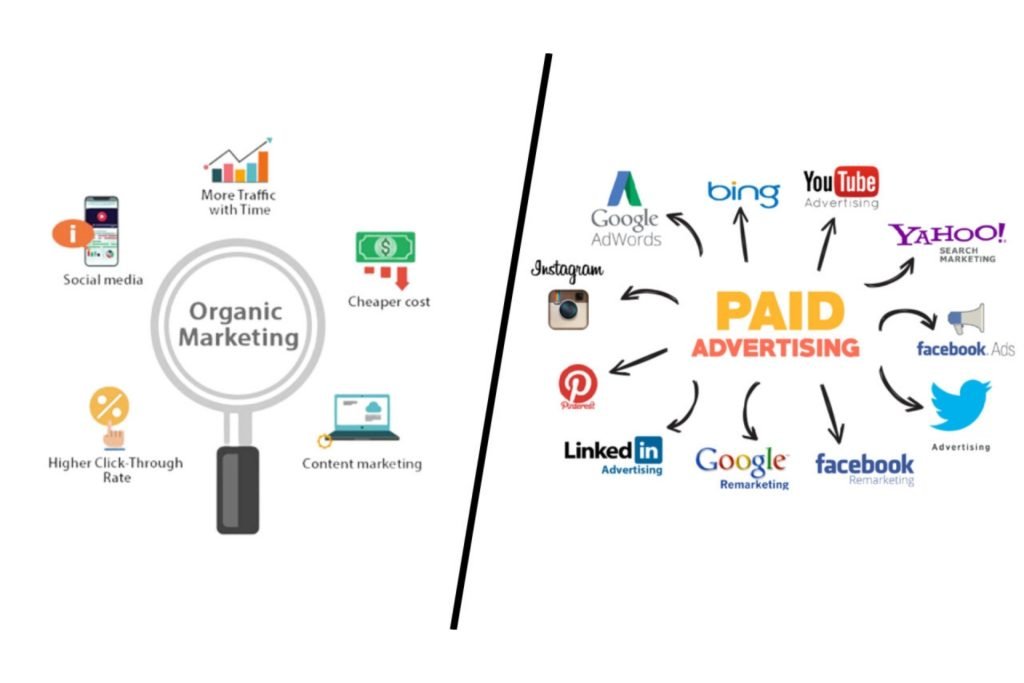
Why partner with Smart Designs?
Because we blend creativity with data-driven precision. We’ll work closely with you to craft campaigns that resonate with your target audience (in their language, with their interests), choose the right platforms and budgets, and continuously optimize for results. Whether you’re a Pune tech firm looking to generate qualified leads, a Nagpur retailer wanting more footfall, or a Mumbai brand ready to go national with a splash – we have the expertise to deliver high-ROI marketing campaigns that meet your goals and then raise the bar.
It’s time to stop guessing and start growing. Let Smart Designs be your trusted partner in navigating the paid advertising and influencer space. Together, we’ll modernize your marketing strategy, amplify your reach across Maharashtra (and beyond), and convert those clicks and likes into loyal customers and tangible business growth.
Ready to elevate your marketing game? Contact Smart Designs today and let’s craft your success story – with our team by your side, your brand will not only join the digital revolution, but lead it. Let’s achieve high ROI, impactful results, and make your business the next great case study in Maharashtra’s digital marketing arena.
Smart Designs – Your Partner for Smarter, High-ROI Marketing. Let’s grow together!